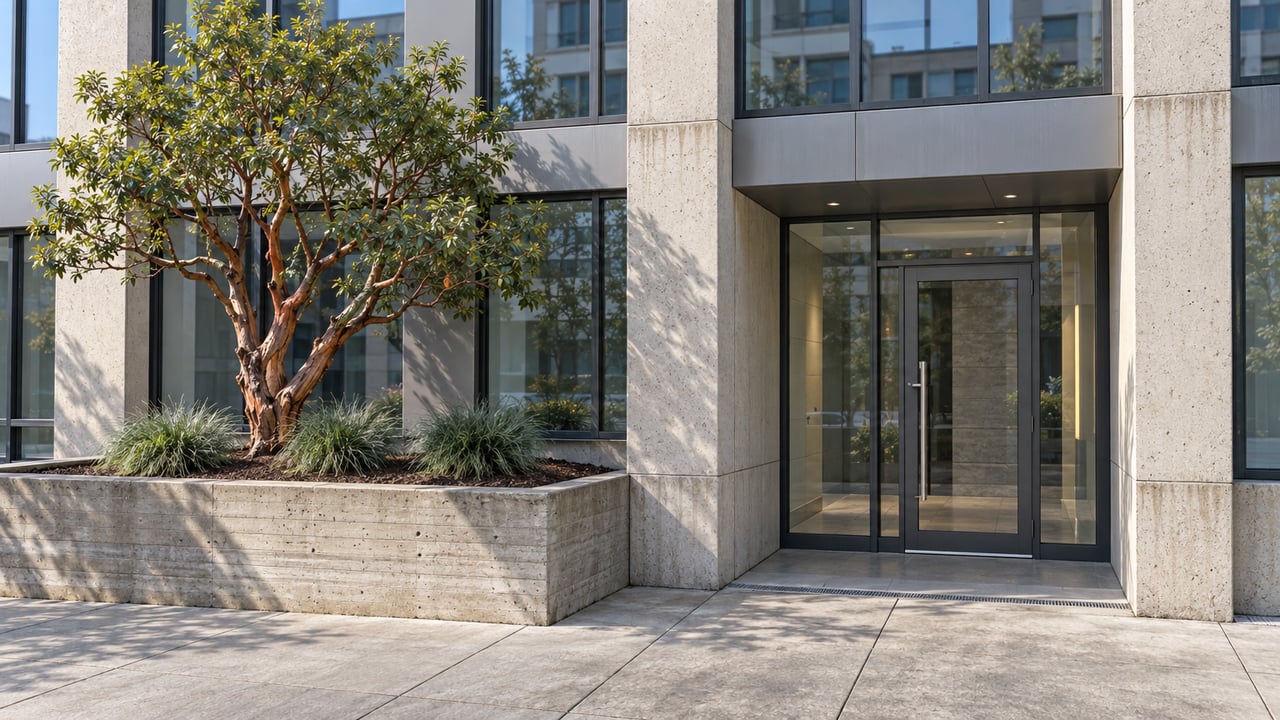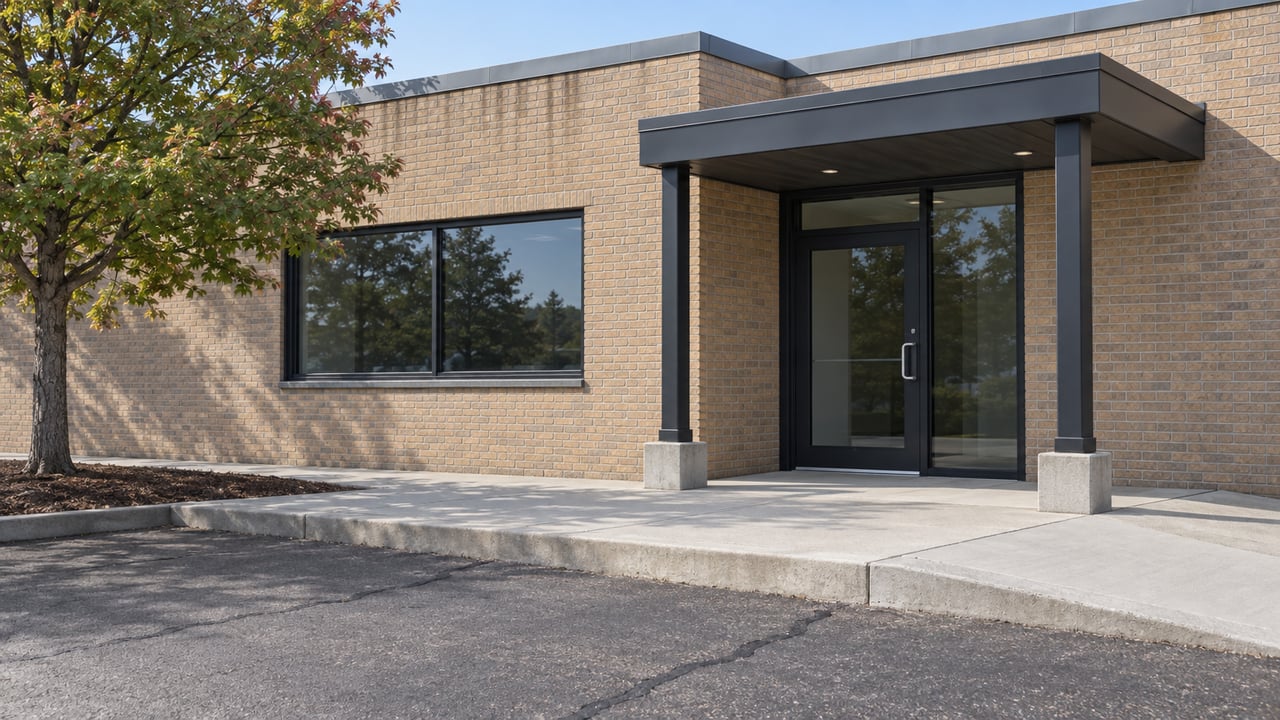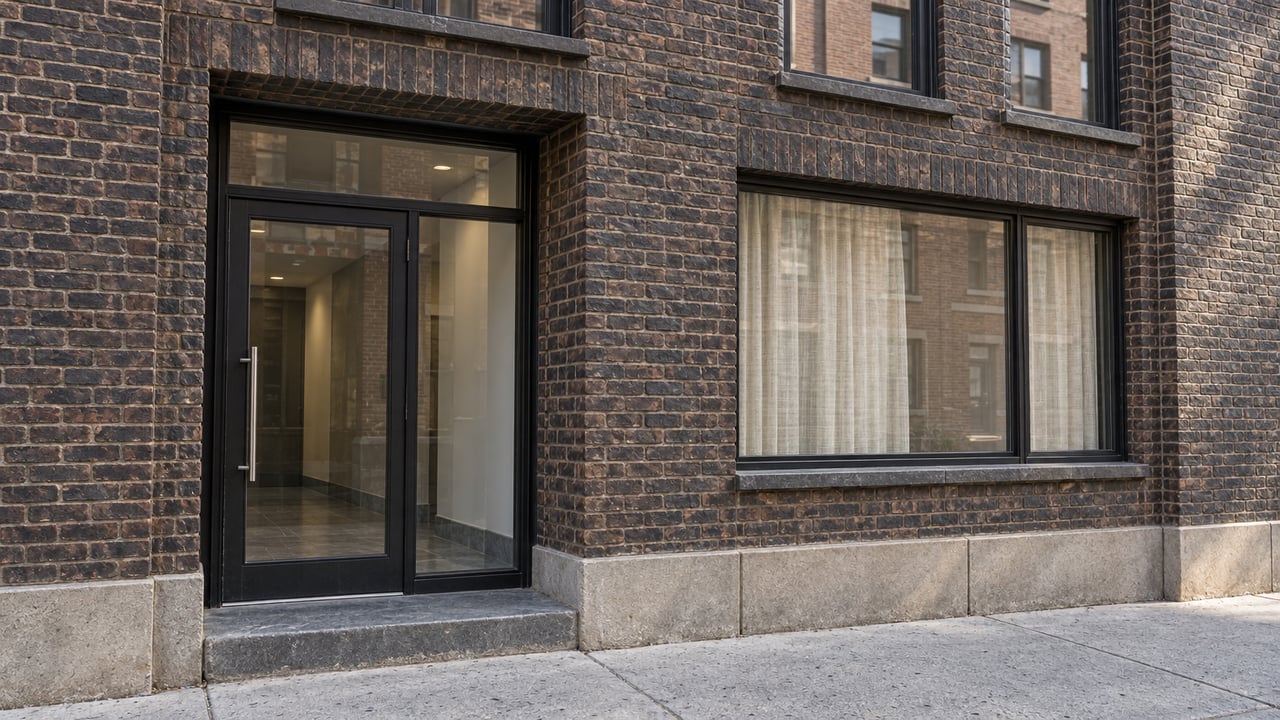
On August 15, EMP Capital Group signed two 20-year supermarket leases two blocks apart on Atlantic Avenue in Prospect Heights, as reported on September 10, 2026. CTown took 8,400 square feet at the base of 1042 Atlantic Avenue, the 19-story, 237-unit building known as Prosper Brooklyn. Atlantic Market, an independent grocer, took 8,000 square feet at 880 Atlantic Avenue, the 19-story, 257-unit Eight80 BK. Both deals had an asking rent of $50 per square foot, and both stores are scheduled to open in the third quarter of 2027, according to Commercial Observer.
Both buildings used the city's Food Retail Expansion to Support Health program, FRESH, to get extra residential floor area in exchange for a qualifying grocery. Twenty years is the length of the lease. The grocery obligation lasts longer, because it is recorded against the land and binds every future owner. For anyone underwriting retail, mixed-use or development sites inside the Atlantic Avenue Mixed-Use Plan, that obligation matters more than the rent.
The residential certificate of occupancy waits on the grocery space
The first friction in a FRESH building sits upstairs. Under Section 63-31 of the Zoning Resolution, the city can't issue a certificate of occupancy for the bonused part of a building until the FRESH store space has its own temporary certificate of occupancy. A final CO for that part also waits until the store space is built out according to the certified drawings and has its own final CO. The restriction is then noted on every temporary and final CO for the building.
In practice, the ground-floor retail schedule drives the residential lease-up schedule. A sponsor can't treat the grocery box as something to finish whenever a tenant shows up. The space has to reach CO before the apartments it paid for can be occupied. The store itself has to start operating "within a reasonable period" after its temporary CO. Both Atlantic Avenue buildings were finished before their grocers signed. Commercial Observer reports that Eight80 BK was completed in 2025 and Prosper Brooklyn in 2026. Even so, neither store is expected to open before the third quarter of 2027.
What the extra floors commit the owner to
The bonus is generous. FRESH grants one extra square foot of residential floor area for each square foot of FRESH store, up to 20,000 square feet per zoning lot. On Atlantic Avenue, City Limits reported that the bonus let both developments rise to 19 stories instead of the 17 originally planned. Here is what the owner takes on in exchange, as written in Article VI, Chapter 3:
| Obligation | What the text requires |
|---|---|
| Store format | At least 6,000 sf selling a general line of food and non-food grocery goods; 25% for perishables with at least 500 sf of fresh produce; 35% for non-perishable food; 6,000 sf on a single story |
| Tenant commitment | A signed lease or written commitment from the operator before certification |
| Recorded restriction | A declaration of restrictions, recorded against all tax lots, binding the owner and successors to continued FRESH use |
| Vacancy grace | Six months after an operator leaves, if the owner notifies the Department of City Planning on time, plus a force majeure exception |
| Exit | Change of use needs DCP certification, or a City Planning Commission authorization with findings that include poor market conditions and unsuccessful efforts to find a replacement operator |
| Ongoing compliance | Affidavits starting in the second calendar year after certification, then every three years |
The vacancy row matters most for valuation. A typical vacant retail box can be re-tenanted with any permitted use. A FRESH box that goes dark gives the owner six months before the declaration applies again, and the realistic replacement pool is other grocers. Noncompliance can be treated as a zoning violation, with remedies that reach permits and certificates. That changes how an investor should weigh the operator's credit. Over a 20-year lease, a grocer's covenant is the only check on what that space is worth, because the alternative uses that would normally set a floor on its value are mostly gone.
Three stores share one half-mile budget
A December 2021 amendment added a limit that works more like a shared quota. Section 63-023 bars any new bonus certification if the FRESH bonus floor area from all certified stores within a half-mile of the lot would go above 40,000 square feet. Stores certified before 2021 count toward that total. A store that was already certified can be re-certified in a saturated area, but it can't get any additional bonus. The NYC Comptroller's 2024 review describes this as a saturation provision.
The Department of City Planning's March 2025 CPC report on the Atlantic Avenue plan lists three FRESH stores on this stretch that are tied to residential bonuses. One had been certified when the report was written, and the other two were pending applications:
- 953 Dean Street: a 6,500-square-foot FRESH store that received Chair Certification in 2024 under application 240346 ZCK. CB8 minutes name Chestnut Supermarket as the operator.
- 1034-1042 Atlantic Avenue: an application, N 240377 ZCK and N 240379 ZAK, for a bonus and height waiver tied to a 7,400-square-foot store.
- 870-888 Atlantic Avenue: a 2025 application by a new owner, N 250182 ZCK and N 250183 ZAK, for a bonus and height waiver tied to a 7,900-square-foot store.
The square footage changes from document to document. The leases Commercial Observer reported cover 8,400 and 8,000 square feet, and CB8's June 2024 minutes put the 1034 store at 7,900. In any version, three stores within a few blocks of each other account for a large share of a 40,000-square-foot radius limit. The Council projected that the Atlantic Avenue plan would support about 4,600 new homes. Any later project in the corridor that wants to add floors with a grocery has to check how much of the radius budget is left after these three stores before it counts on the bonus in a pro forma.
The tax side doesn't work the same way. FRESH's financial benefits are administered separately by the NYC Industrial Development Agency. NYCEDC lists building-tax stabilization, a land-tax abatement of up to 25 years, sales-tax waivers on construction materials, and a mortgage recording tax reduction from 2.8% to 0.3%. NYCEDC calls these benefits discretionary, and says applicants generally have to apply before signing a lease or acquisition contract. The Comptroller notes that the tax program has no saturation cap. DCP also says that the areas added in the 2021 expansion received the zoning incentive only, without the tax benefits. A site's zoning eligibility therefore says nothing about its tax eligibility.
Community Board 8 helps pick the grocer
The certification process sends each application to the affected community board, which has 45 days to comment. On Atlantic Avenue, that review changed who the tenants turned out to be.
At 1034 Atlantic, CB8's June 2024 minutes describe a 7,900-square-foot Fine Fair market. The board approved the FRESH proposal 22 to 10, with conditions that included local hiring and free delivery. At 888 Atlantic, the June 2025 minutes show the developer, Elie Pariente, arriving with a letter of intent from Union Market. Members questioned whether that grocer fit the location and raised safety concerns about deliveries through a front door on Atlantic Avenue. Pariente and his land-use counsel, Richard Lobel, then told the board that Bravo Supermarkets would take the space. The board backed the application 31 to 1, on the condition that the applicant prioritize a more affordable supermarket tenant.
By August 2026 the tenants were CTown at 1042 and Atlantic Market at 880. Neither was the operator named at the board meetings. The same 2025 meeting also showed how other rules affect a FRESH floor plate. Because City of Yes removed the project's parking requirement, the team said it had room to handle loading through the basement, which addressed the delivery concern.
The broker on both leases saw the deals as the program doing its intended job:
"Thousands of new units are coming to the neighborhood with the Atlantic Avenue rezoning. This is the FRESH program doing what it's supposed to do, bringing a real neighborhood amenity to all the new residents moving in."
Eddie Mamiye of MOD Commercial Realty gave that statement to Commercial Observer. For an owner, the takeaway is that the tenant has to satisfy the board, the format rules and the lender all at once, and that the operator presented at a hearing may not be the one who signs.
Reading a FRESH ground floor in diligence
FRESH buildings will keep coming up in Atlantic Avenue acquisitions and refinancings, so these are items to review with counsel early in diligence:
- Pull the recorded declaration from the City Register. Read its successor language, its notice requirements and how the six-month vacancy window is triggered.
- Check the certificate of occupancy for the FRESH notation, and confirm whether the residential floors have temporary or final COs.
- Underwrite the grocer's covenant over the full lease term, with re-tenanting assumptions limited to other qualifying grocers.
- Map the half-mile radius around any development site and total the certified FRESH bonus area before including bonus floors in a pro forma.
- Treat zoning and tax eligibility separately, and confirm NYCIDA timing before you sign a lease or contract.
- Calendar the compliance affidavits in the asset management plan.
This post is general information about public zoning and incentive rules. It isn't legal, tax or financial advice, so confirm how any of these provisions applies to a specific property with your own counsel and tax advisor.
FAQ
Can a FRESH space be converted to non-grocery retail later? Only through DCP certification of the change of use, or a City Planning Commission authorization that requires findings including poor market conditions and failed efforts to find a replacement operator. A cancellation notice for the declaration is then recorded.
Does the obligation end when the lease ends? The declaration binds the owner and its successors to continued FRESH use, and it doesn't depend on any particular lease.
What happens if a certified project doesn't start construction? If foundations aren't completed within four years of certification, the certification and the building permit lapse, and a new certification is required.
Tide Realty Group underwrites, finances and operates mixed-use assets with the legal, construction and asset management team in-house, which is what a recorded grocery obligation calls for over a 20-year hold. If you are pricing a FRESH-encumbered ground floor or a development site inside the Atlantic Avenue plan, Rise With Us.