The BankNote Building's tenant roster looks very safe on paper. The New York City Human Resources Administration and the New York City School Construction Authority sit in the building alongside Fedcap Rehabilitation Services, America Works, Hunts Point Alliance for Children and several congressional and government offices. For the nonprofits on that list, though, the money behind the rent comes through City contracts. In fiscal 2025, the City Comptroller found that 81% of registered human-services contracts were registered after their start date.
Owners and investors pricing the roughly 100,000 square feet now marketed at 1231 Lafayette Avenue in Hunts Point should focus on that gap. A lease signed with a contract-funded nonprofit is backed by two schedules the landlord does not set: how fast the City registers and pays its contracts, and when the Metro-North station in the leasing pitch opens.
What is on offer at Lafayette Avenue
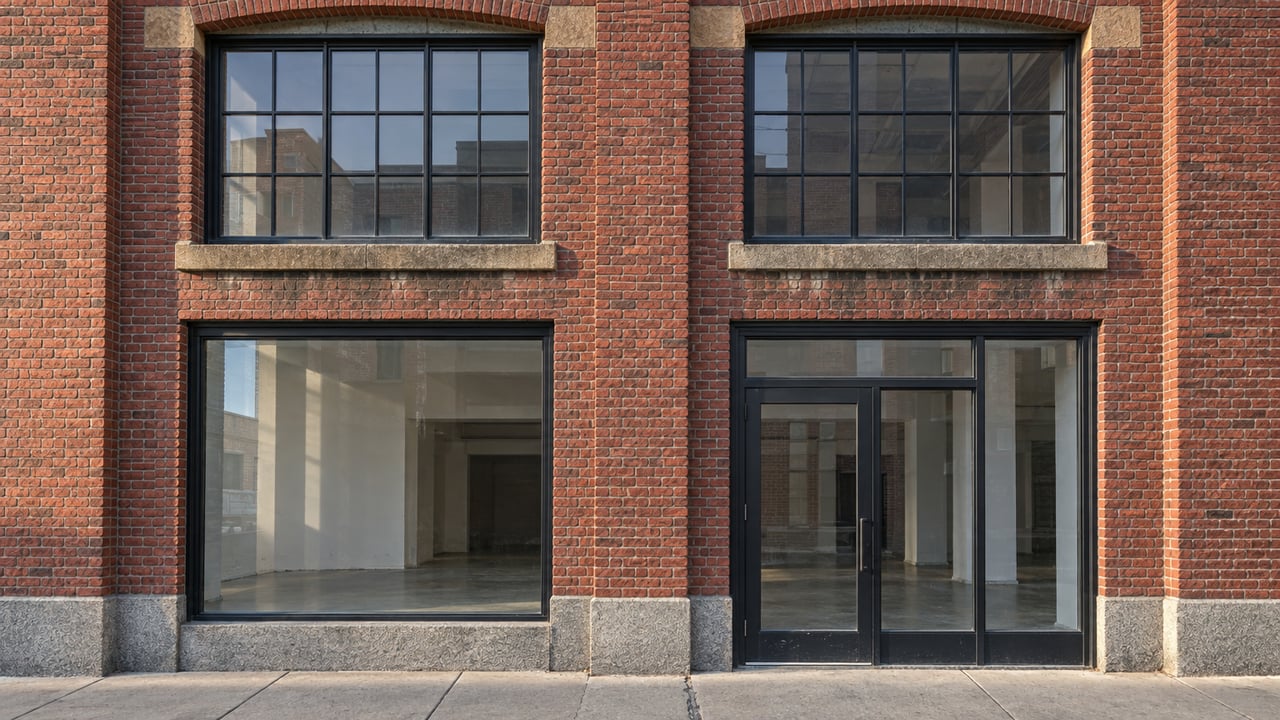
On October 20, 2026, Connect CRE reported that OPEN Impact Real Estate and JLL will run leasing and marketing for the approximately 405,000-square-foot property. OPEN co-founder Stephen Powers and JLL Vice Chairman Mitchell L. Konsker lead the assignment. The announcement carried by citybiz puts current availability at about 100,000 square feet. That includes a contiguous block of about 75,000 square feet plus another 25,000 that can be combined into a campus. Ownership is also exploring a turnkey leasing program for nonprofits, a school or educational campus, and an athletic facility, which would need approval from the Landmarks Preservation Commission.
The building was constructed in 1909 as the headquarters and printing plant of the American Bank Note Company. It is listed on the National Register of Historic Places and won BOMA New York's 2026 Pinnacle Award in the Historical Building category.
The capital structure matters for everything below. Commercial Observer reported that Madison Marquette and Perella Weinberg bought the property from Taconic for $114 million in 2014. In August 2019, the same outlet reported that Safehold paid $64.6 million for the land under a ground lease. Bank of America refinanced $93 million of debt at the same time, split into a $52 million leasehold loan and a $41 million land obligation. A leasehold owner has fixed obligations above the land, so the timing of tenant cash flow matters more than the headline rent.
The rent check passes through a registration desk
A human-services nonprofit generally cannot draw on City contract money until the contract is registered. Fiscal 2025 is the most recent year the Comptroller's annual contracts report covers, and it shows how often registration came late.
| Measure, human-services contracts | Period | Figure |
|---|---|---|
| Registered after start date | FY2025 | 81.01%, or 2,900 of 3,580 |
| Registered more than six months late | FY2025 | 51.84% |
| Registered more than a year late | FY2025 | 37.85% |
| Retroactive, unregistered contracts at nine large agencies | Snapshot of April 15, 2025 | 2,508 contracts totaling $4.608 billion |
These figures are a year or more old. The Comptroller usually publishes the next annual report around the end of October, so check for fiscal 2026 numbers before relying on them. They still describe the system a tenant's finance director works within. When a contract is registered a year after its start date, the organization has been delivering services, paying staff and paying rent for a year before the City funds begin to arrive.
In your rent roll, that lag can look like a tenant that renews on time, expands when it wins a new program, and then pays slowly in the months while a large contract waits for registration.
The October 8 fix covers much smaller awards
On October 8, 2026, Mayor Zohran Mamdani and Council Speaker Julie Menin expanded the Discretionary Grant Pilot. The Mayor's Office said that up to 800 nonprofits will receive 100% of their awards within 30 days after both sides sign. In fiscal 2026, the pilot paid participants in about three months on average, compared with more than 12 months through the traditional process.
The size limit is what matters here. Nonprofits receiving City Council discretionary funding in fiscal 2027 may qualify only if their cumulative awards from Mayoral agencies total $25,000 or less. In fiscal 2026 the pilot disbursed $1 million across more than 100 providers. The City says discretionary contracts make up nearly 70% of the human-services contract backlog, so the pilot cuts the backlog by count. A nonprofit that fills a 75,000-square-foot block runs on much larger contracts, and those remain in the standard registration process. For a landlord, the October announcement is good news for small community groups. It does little for the tenants a block that size needs.
What does shorten the gap: advances, early submission and COLA
Three mechanisms affect the larger contracts more directly, and each one is checkable.
MOCS's fiscal 2027 provider guidance says eligible nonprofit human-services providers should have received a 50% advance under Local Law 156, and City Council discretionary contracts are among the exclusions from automatic advances. Advances depend on registration. In its Citywide Indicators Report, MOCS says its timely-registration work is what lets agencies "issue advances on registered human services contracts, delivering upfront cash flow."
On submission, MOCS reports that 79% of tracked July 1 fiscal 2027 actions reached the Comptroller on time by July 1, 2026. By September 1, 96% of the July actions and 82% of the August 1 COMPASS after-school actions had been submitted. Submission is not registration, but it is the earliest public sign of whether this year's contracts are moving.
On escalations, the City's $741 million COLA agreement set 3% increases effective July 1, 2024, July 1, 2025 and July 1, 2026. The July 2026 increase is the last scheduled step of that agreement. A lease with annual bumps that run past fiscal 2027 assumes contract revenue growth the current agreement does not provide.
The station in the pitch has a 2030 date
The leasing announcement says the forthcoming Hunts Point Metro-North station will make the property more accessible. The MTA's Penn Station Access page, updated September 14, 2026, lists 2030 as the project's current estimated completion date. A 10-year lease signed this winter would run about four years before trains are scheduled to stop nearby. Any rent premium tied to the station applies to the later part of the term. A tenant choosing between this building and others will weigh its commute as it stands today.
Bronx nonprofits are still signing long leases
None of this means demand is weak. Contract-funded organizations in the Bronx keep making long commitments, which is why the timing questions are worth answering rather than avoiding.
Crain's New York reported in June 2026 that QSAC, Quality Services for the Autism Community, leased about 25,000 square feet at Simone Development's 1200 Zerega Avenue. QSAC is moving from 1010 Underhill Avenue into nearly 13,000 square feet of indoor space plus outdoor space. In February 2026, Commercial Observer reported that Legal Services NYC agreed to a 15-year extension and an expansion to 8,995 square feet at 349 East 149th Street.
So these tenants do commit for the long term. What a landlord has to price is how the rent arrives over the course of the lease.
Questions to settle before pricing a mission-driven lease in the Bronx
- What funds the rent? Find out which agencies, which contract types, and whether each contract is a multi-year human-services award or a discretionary award. The answer tells you which registration process the tenant's cash depends on.
- Is the core contract registered yet? An unregistered contract that started months ago makes the tenant's balance sheet the bridge. Ask how that bridge is financed.
- Has the tenant received a Local Law 156 advance? Ask the tenant whether its contracts fall under the MOCS guidance and when any advance arrived compared with your rent commencement.
- Do the rent escalations line up with known contract increases? Bumps past the final July 2026 COLA step depend on future City budgets.
- Does the security deposit reflect the registration gap? Deposit size, a letter of credit, or free rent timed to registration can match lease economics to how contract-funded tenants actually get paid.
- Does the deal still work with no station premium before 2030? Run the numbers on today's access and treat the Hunts Point station as upside.
This post is general market information and is not legal, tax or financial advice. Confirm how any contract, advance or lease term applies to your situation with your own attorney, accountant or lender.
Tide Realty Group underwrites contract-funded tenancies under one roof, with leasing advisory, structured finance and asset management together. We can build the cash-flow schedule, structure the credit support and run the building once the tenant moves in. Rise With Us.