Brooklyn's Q1 2026 multifamily print looks contradictory on first read. Sales volume rose 8.3% year over year to $918.4 million across 316 closed deals, transaction count climbed 16.6%, and yet median price per square foot fell 28.3% to $394. Total square feet traded jumped 146.8%. A reader used to interpreting Brooklyn as a tight, high-basis market would reasonably conclude that pricing broke.
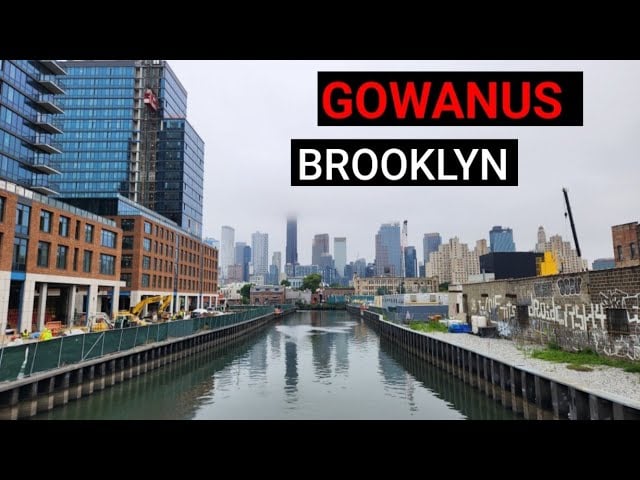
It did not. What broke is the assumption that Brooklyn's traded stock in early 2026 resembles Brooklyn's traded stock in early 2025. A narrow band of Gowanus product, vested under an expired tax program and racing a June 15, 2026 completion deadline, has entered the sample and pulled per-foot pricing with it. The investor question is not whether Brooklyn repriced. It is whether the vested Gowanus pipeline is a basis opportunity or a closed window, and where the next dollar of mid-market capital should sit.
The friction that shaped this cycle
The mechanism starts with a construction clock. To qualify for the old 421a tax benefit, projects needed footings in place by June 15, 2022 and completion by June 15, 2026. That deadline is why Gowanus, alone among NYC rezonings, is delivering at pace. Fried Frank's Anita Laremont has attributed the speed to the 2022 421a expiration and a "built-in incentive to get moving quickly" for developers trying to vest under the old program before its replacement, 485x, took effect.
Not all of those projects were going to make the completion date. In February 2024, Governor Hochul announced that 320 and 340 Nevins Street, along with 16 other Gowanus projects, would receive a state-authorized PILOT structure mimicking 421a benefits, described at the time as freeing developers from the make-or-break 2026 deadline for roughly 5,300 apartments. The Nevins site itself is a full-block parcel that Tavros Capital and Charney Companies acquired from Property Markets Group in 2022 for $102 million, one of the earliest post-rezoning trades.
That workaround is the transaction-specific friction that matters here. Eighteen Gowanus projects sit on a different tax footing than every other Brooklyn multifamily development. Underwriting them requires a lender and an appraiser to accept a state PILOT in lieu of a statutory abatement, and to price the residual tax exposure if the PILOT terms are ever renegotiated.
Reading the Q1 print through the mix
The headline numbers only make sense once you decompose the traded pool.
Brooklyn multifamily, Q1 2026 | Value | YoY change |
|---|---|---|
Sales volume | $918.4M | +8.3% |
Transactions closed | 316 | +16.6% |
Median price / sq ft | $394 | −28.3% |
Square feet traded | ~4.0M | +146.8% |
A 146.8% jump in traded square footage against a 16.6% jump in deal count means the average deal got materially larger. Larger deals in Brooklyn in early 2026 are disproportionately new-construction multifamily with Mandatory Inclusionary Housing set-asides of 25% to 30% permanently affordable, which is the Gowanus signature. Affordable set-asides depress per-foot pricing on a blended basis, and large ground-up assets carry different cap rate expectations than the walk-up and mid-rise product that dominated Brooklyn's 2024 and 2025 sample.
Free-market stabilized product tells a different story. NYC multifamily cap rates sat at 5.4% in Q1 2026 per Moody's data cited by JPMorgan, with average rents up 1.5% quarter over quarter and vacancy at 3.3%. Trade velocity is rising, transaction count across NYC multifamily is up 4% year over year and 12% versus 2023 per Ariel Property Advisors, and free-market assets remain a robust share of Brooklyn's trades. The $394 PSF headline does not describe that pool. It describes the pool the Gowanus deliveries entered.
Three tax regimes, priced against each other
Anyone underwriting Brooklyn multifamily in the second half of 2026 is choosing a lane among three tax regimes, and the lanes are not equivalent.
421a (expired, partially rescued). Projects that hit their 2022 footings deadline but risked missing 2026 completion have, in 18 Gowanus cases, a state PILOT alternative. Everywhere else, the program is closed. LP interests and mezz positions in these vested projects are effectively a closed-end universe.
485x (ground-up successor). The tiered start windows before June 30, 2026, 2028, and 2031 carry declining benefits. The tier-one window has, in practical terms, closed for new starts that were not already in permitting. The NYC Comptroller's May 2026 data showed a 485x pipeline of 2,603 units with only 540 income-restricted, none in the 100-plus category, and only a minimal share in Manhattan. That is a small program relative to the demand for tax relief on new construction.
467-m (office-to-residential conversion). The successor 467-m program grants a 35-year abatement with a 65% exemption for the first 30 years, then a 10-point annual decline, in exchange for 25% affordable at an 80% AMI average. The Comptroller estimated that 12.2 million gross square feet of Manhattan south of 59th Street, containing roughly 14,500 apartments, could start renovation and qualify before the June 2026 threshold. In Brooklyn, 175 Pearl Street in DUMBO, developed by Watermark Capital Group with S. Weider Architect, is using 467-m to add an 11-story vertical expansion and deliver nearly 200 homes with 25% affordable.
The three lanes explain why comparable-looking Brooklyn deals are trading at incomparable yields. The tax structure is doing more of the pricing work than the operating fundamentals.
Where the vested Gowanus pipeline actually sits
The 2021 rezoning enabled roughly 8,500 residential units in an 82-block area, more than 3,000 of them affordable. What is remarkable is how much of that is already in the ground.
On April 12, 2026, the City Planning Commission signed off on a 27-story, approximately 1,000-unit mixed-use complex at 175 Third Street, with about a quarter of apartments permanently affordable, canalfront retail, ground-floor artist space under the Gowanus Mixed Use Incentive, and a new esplanade. Gowanus Green, on a site awarded through a 2008 HPD RFP, is a 955-unit, 100% affordable, six-building project developed by Fifth Avenue Committee, The Bluestone Organization, Mega Development, and Jonathan Rose Companies, with Marvel Architects, targeting a Phase 1 construction start in 2026. It includes roughly 28,000 SF of neighborhood retail and community space, a new public school site, and a 1.5-acre park.
Land basis has moved accordingly. JLL's Christopher Peck, who has capitalized many of the area's new projects and whose firm's first Gowanus deal closed in 2011 when land was trading at roughly $40 per foot, has estimated comparable land at roughly $300 per foot today. Peck's framing of Gowanus as the "hole in the doughnut" between Carroll Gardens, Park Slope, Downtown Brooklyn, and Cobble Hill is the adjacency argument for why the basis holds even after the tax tailwinds fade.
The underwriting call
For a mid-market investor with capital to deploy in Brooklyn multifamily this year, the choices are not symmetrical.
- Buy into the vested pipeline through LP or note positions. The universe is finite, the tax basis is set, and the sponsors are already selected. The friction is that the PILOT structure on the 18 rescued projects introduces a political-risk line that most standard multifamily models do not carry. Price it explicitly.
- Underwrite fresh 485x ground-up in Gowanus or an adjacent submarket. The tier-one economics are gone for anything not already permitted, and the program's small early pipeline suggests the tier-two window will not, on its own, close the residual gap between construction cost and stabilized value at current cap rates. Deals that pencil here are deals with strong land basis or non-tax-driven advantages.
- Pursue 467-m conversion where floor plates cooperate. Brooklyn conversion opportunities exist, DUMBO's 175 Pearl Street being one, but the borough's older commercial stock is more piecemeal than Lower Manhattan's, and floor-plate depth remains the binding constraint noted in the underlying zoning framework, ZR 15-00.
The stabilized free-market Brooklyn trade, priced against the 5.4% NYC cap rate benchmark and 3.3% vacancy, remains a fourth lane and probably the least crowded one, because most sponsor capital is chasing the tax-driven programs.
What could break the read
Two developments would change the mix argument. The first is a legislative extension of the tier-one 485x window beyond June 30, 2026, which the state legislature has considered but not delivered. The second is an unresolved Unified Stormwater Rule cost curve. The rule applies to all new development inside the Gowanus rezoning area and is a real underwriting input, not a background compliance item. Superfund progress, including the completed excavation of the Red Hook 8-million-gallon underground CSO tank, is on the right side of that ledger, but flood mitigation infrastructure identified in the city's Cloudburst Study for the neighborhood is still in scoping.
Also relevant: 90% of the affordable pipeline in the borough is politically anchored, and the Gowanus Oversight Task Force is actively tracking the city's 56 commitments from the rezoning. That is a governance layer most Brooklyn multifamily submarkets do not have.
FAQ
Is the 28.3% PSF decline in Q1 2026 Brooklyn multifamily a repricing event? No. It is a mix effect. Traded square footage rose 146.8% year over year against a 16.6% rise in deal count, meaning the average traded asset was materially larger and skewed toward new-construction product with 25% to 30% affordable set-asides that blend per-foot pricing downward.
Can new Gowanus ground-up starts still access 421a-equivalent economics? Only inside the 18 projects covered by the February 2024 state PILOT authorization, which was expressly limited to Gowanus projects that could in theory have still qualified for 421a. New starts are working under 485x, whose tier-one window has effectively closed.
What is the strongest non-tax argument for Gowanus basis? Adjacency. Gowanus sits between Carroll Gardens, Park Slope, Downtown Brooklyn, and Cobble Hill, unlike most city-sponsored rezonings that create new districts in isolation. Land that traded near $40 per foot in 2011 is closer to $300 per foot today per JLL, and the pipeline delivering into that basis includes canalfront esplanade, park, and school commitments already scoped.
If you are evaluating a Gowanus LP position, a 485x pencil in an adjacent submarket, or a Brooklyn 467-m conversion, the underwriting call turns on which tax lane you are actually pricing. Tide Realty Group works with mid-market investors and sponsors on exactly this decomposition, from sourcing through capital structure. Rise With Us.