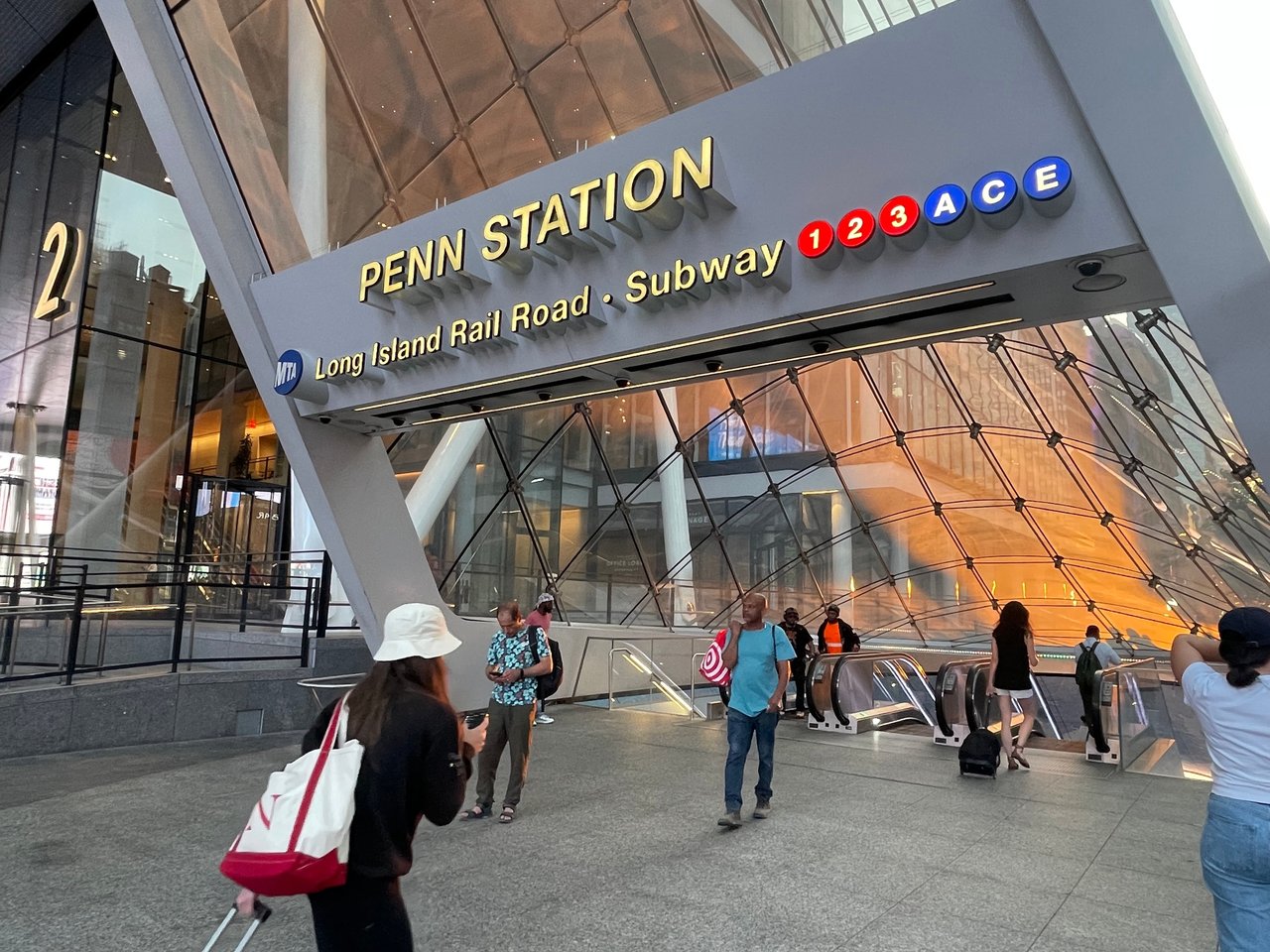
Site tours through Parkchester, Van Nest, and Morris Park still get pitched against a 2027 Metro-North opening. That deck is out of date. In May 2026, MTA officials confirmed that hopes for even partial service at the four new East Bronx stations by 2027 have effectively expired, with the project's realistic completion pushed to 2029. The rezoning under those stations, however, is already law. That timing gap is the trade.
Investors who bought the 2024 narrative underwrote a 2027 delivery into a 2027 opening. The 2026 reality is a 2029 opening, a scaled-back envelope near Morris Park, and a 1.6 million square foot hospital pavilion that just entered public review across from the future station. The underwriting question is no longer "when does rail-adjacent rent lift?" It is "who is the demand anchor while rail slips two years, and how do you price basis against that?"
The friction hiding inside the rezoning
The Bronx Metro-North Station Area Plan the City Council approved in August 2024 covers 46 blocks around the four planned stations at Hunts Point, Parkchester/Van Nest, Morris Park, and Co-op City. City estimates put the buildout at roughly 7,000 residential units, 1,700 of them income-restricted, alongside 1.23 million square feet of commercial space and a projected 10,000 permanent jobs. The rezoning routed roughly $500 million into capital commitments: $189 million for streets, $170 million for sewers and water lines, $119 million for parks, $12 million for schools, and a $10 million line for the 49th Precinct.
The friction is that two of the four station areas, Hunts Point and Co-op City, received no significant zoning changes at all. The buildable envelope sits in Parkchester, Van Nest, and Morris Park, and it was materially reduced during Council negotiations. Council Member Kristy Marmorato secured density reductions near the Morris Park station and required a per-building parking minimum, which cut the projected unit count near that station from roughly 7,500 to about 5,500. She also carved a U-shaped retail corridor on Stillwell Avenue and Eastchester Road out of the final map.
What the two-year slip actually costs
Groundbreaking on Penn Station Access happened in December 2022, with a Halmar International/RailWorks joint venture holding the design-build contract. The MTA now says the path to service runs through 2029, contingent on Amtrak cooperation on the Hell Gate Line. The project scope has not changed: four ADA-accessible stations, 19 miles of rehabilitated track, and a one-seat ride from the East Bronx to Penn Station that shaves up to 50 minutes off the current commute. The date has.
For a value-add sponsor who closed on land in 2024 pricing a 2027 stabilization, the slip is not a marketing headache. It is a carrying-cost problem. A stylized breakdown of what changes when the anchor date moves from late 2027 to late 2029:
- Two additional years of construction-loan interest, or one full mini-perm cycle, before the transit premium underwrites in trade comps.
- A refinance window that now overlaps the back half of the current administration's rent-policy cycle rather than clearing it.
- Lease-up assumptions that must be defensible on Bronx wage growth and hospital-worker demand alone, without the "one-seat-ride-to-Penn" tailwind.
- Exit cap rates priced against 2029 investor sentiment rather than 2027, which currently reads as a wider band than most 2024 pro formas modeled.
The correct read is not that TOD basis in the East Bronx is broken. It is that the 2024-vintage basis was priced on a schedule that no longer exists, and buyers underwriting land today have an asymmetry the earlier cohort did not.
Morris Park is now a medical trade, not a transit trade
The most consequential filing of 2026 in this footprint is not an MTA update. It is Montefiore Medicine's February 2026 SEQR submission for a new Advanced Care Pavilion on the Einstein/East Campus. The building, described in the state's Environmental Notice Bulletin, is a 20-story, roughly 2.16 million gross square foot structure containing 420 high-acuity intensive care beds, a 76-treatment-room emergency department, surgical and imaging floors, and approximately 800 parking spaces, including up to 50 made available to local residents. It sits at 1300 Morris Park Avenue, directly across from the future Morris Park station.
To realize the project, Montefiore is seeking to expand its Large-Scale Community Facility Development boundary, demap portions of Newport Avenue, Van Nest Avenue, and Tenbroeck Avenue, and demolish the Harold and Muriel Block Building and the Gruss Magnetic Resonance Research Center. The stated analysis year for the SEQR is 2037. Read that number carefully. Montefiore's own planners are building against a 2037 stabilized-operations horizon. A residential sponsor who indexes to the same horizon rather than to Metro-North's 2029 date arrives at a very different underwriting.
The Morris Park station area is not a commuter-rail rent-growth story with a hospital nearby. It is a hospital-expansion story with a commuter-rail option attached.
The employment math is what makes that reframing work. Montefiore Einstein already operates more than 300 locations across New York City, Westchester, and the Hudson Valley, with the Einstein research enterprise pulling NIH funding approaching a quarter billion dollars annually and running more than 850 active clinical trials. A 420-bed high-acuity tower plus expanded ED does not lease up on visitor traffic. It lease-ups on 24/7 shift-based clinical staff whose commute is measured to Eastchester Road, not to Penn Station.
Pricing the basis against actual comps
Bronx investment sales recovered sharply through 2025 and stayed active into 2026. Ariel Property Advisors reported borough dollar volume up 106% year over year in 1H 2025 to $1.07 billion across 126 transactions, with development site pricing at roughly $101 per buildable square foot, the second-highest reading in six years. In 1H 2026, citywide investment sales rose 37% year over year to $17.38 billion, with development sales leading the increase on the strength of 485x and City of Yes.
A few reference points inside and adjacent to the rezoning footprint:
Deal | Location | Price | Notable term |
|---|---|---|---|
1580 Story Avenue | Soundview | $60.0M | 421-a vested multi-lot residential site, 1H 2025 |
2740-2768 Webster Avenue | Bronx development site | $55.0M | Stagg Group / Madd Equities JV, 1H 2025 |
1101 Oak Point Avenue | Hunts Point | $37.6M | 2.15-acre Frito-Lay sale-leaseback to Bridge Investment Group, 1H 2025 |
114 Bruckner Boulevard | Mott Haven | $7.0M | 68,400 BSF under City of Yes UAP, closed February 2026 |
883 Bryant Avenue | Parkchester/Van Nest | not disclosed | The only development transaction inside the future rezoned footprint since 2023, per Ariel |
The 883 Bryant Avenue data point is the tell. Between the beginning of 2023 and the rezoning vote, only one development trade cleared inside the three neighborhoods the plan actually upzoned. That is not a market that has already priced in Metro-North. It is a market whose transaction record still reflects the pre-rezoning envelope, at pre-rezoning basis, with a hospital campus that had not yet filed its 20-story expansion.
Where the thesis breaks
The East Bronx TOD reframe is a defensible trade, not a costless one. Three things could unwind it:
- Further slippage at Amtrak. Representatives Ritchie Torres, Alexandria Ocasio-Cortez, George Latimer, Jim Himes, and Rosa DeLauro have already written jointly demanding Amtrak share delay costs; if that fight extends the timeline past 2029, the hospital-anchor thesis has to carry the deal alone for longer.
- Rent policy. The Ariel Q1 2026 review flagged the Mamdani administration's rent-freeze narrative and six new Rent Guidelines Board appointees as a live compression on rent-stabilized returns. A free-market TOD product avoids that directly; a mixed regulatory basis does not.
- Montefiore project scope. The Advanced Care Pavilion is early in ULURP. A materially shorter or delayed pavilion would remove the demand anchor that currently substitutes for the transit anchor.
FAQ
Does the 2029 slip make East Bronx TOD sites cheaper today? Not mechanically. Development pricing in the borough held near $101 per buildable square foot through 1H 2025 and stayed firm into 1H 2026. What the slip changes is the willingness of well-capitalized buyers to pay through-the-cycle basis on the assumption that the 2029 delivery lands into a hospital-expansion market rather than a speculative transit market.
Is the 485x tax program the right pairing here? For ground-up multifamily inside the rezoned blocks, 485x and the City of Yes Universal Affordability Preference are the incentives driving current underwriting, alongside the residual stock of 421-a vested sites like 1580 Story Avenue. Program election is deal-specific and worth modeling against the parking mandate Marmorato negotiated near Morris Park.
What about Hunts Point and Co-op City? Neither received significant residential upzoning in the 2024 plan. Investment activity in Hunts Point is running through industrial and last-mile trades like Bridge Investment Group's Frito-Lay acquisition, not residential TOD. Co-op City remains a stand-alone submarket whose station will change commute times without changing entitlements.
The next 24 months in the East Bronx are a basis story, not a rent story. If your capital is structured to hold through 2029 and to underwrite against a hospital calendar rather than a rail calendar, the current pricing reads as an entry point. If it is not, the slip is a warning, not an invitation. Tide Realty Group works with sponsors and landlords structuring exactly that decision across the borough.
Rise With Us.